The challenge
TerraCore Resources operates three mining sites in Limpopo and the Northern Cape. Each site had accumulated its own mix of sensors over a decade: gas monitors, ventilation fans, conveyor and mill instrumentation, vehicle telemetry. The data landed in isolated site historians and, for the most part, stayed there.
The consequences were concrete. Equipment failed without warning even though the sensors had been drifting for days. Safety readings were reviewed in daily batches, so an overnight gas trend was old news by the time anyone saw it. And group engineering could not compare sites because each one measured and stored things differently.
TerraCore did not need more sensors. It needed the eleven and a half thousand it already had to feed one system that people actually watched.
The approach
We started at one site, one conveyor line, and one question: can we get a sensor reading from underground to a control room screen in under a minute, reliably, on mine-site connectivity? Proving that pipeline first, end to end, meant every later decision was scaling something real rather than designing on faith.
- Proved the pipeline on a single conveyor line before touching the other 40 systems
- Built site gateways that buffer locally, because underground links drop daily
- Normalised every sensor feed into one shared schema across all three sites
- Defined alert thresholds with the site engineers who would answer the alarms
- Provisioned all infrastructure as code with Terraform so site two and three were repeats, not rebuilds
What we built
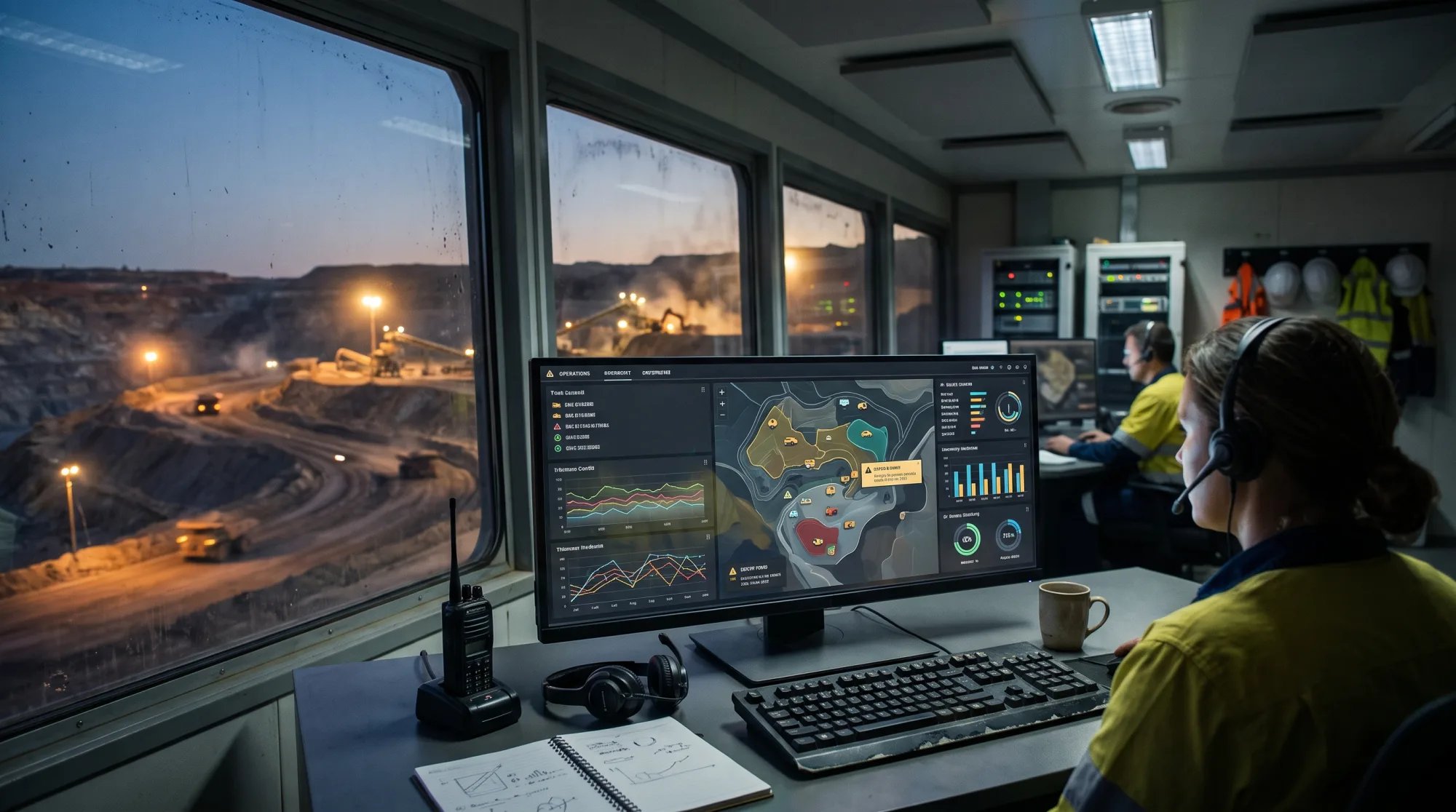
The platform collects readings from 11,500 sensors through hardened site gateways, streams them over Kafka into a time-series store, and serves live dashboards and alerts to each site control room and to group engineering. Safety-critical feeds like gas and ventilation take a priority lane with their own alerting path.
- Site gateways with store-and-forward buffering that survive multi-hour link outages
- A priority alerting lane for gas, ventilation, and seismic feeds, independent of the analytics path
- Control room dashboards in Grafana showing live equipment and environmental status
- Anomaly detection on vibration and temperature trends that flags equipment drift days before failure
- A group-level view comparing availability, downtime, and safety metrics across all three sites
- Full infrastructure as code, so a fourth site is a configuration exercise
45 sec
median time from sensor to control room screen
17
equipment failures pre-empted in the first year
99.9%
pipeline uptime including link outages
The outcome
In the first year on the platform, unplanned equipment downtime across the three sites fell 34%. Maintenance teams now plan interventions around anomaly alerts instead of reacting to failures: seventeen times in that year, a bearing or motor was swapped during a scheduled window because the trend line said so.
The safety change is harder to put a single number on, but the control rooms now see gas and ventilation trends in under a minute instead of the next morning, and every alert is logged with its response time. Group engineering runs a monthly cross-site review from the shared dashboards, and TerraCore has budgeted to bring its fourth site onto the platform next year.